








Ruminant Production in the 21st Century: Globalization of Teaching, Research, and Extension to Support Environmentally-Friendly Nutrition and Management Systems
The FIPSE-CAPES program, jointly administered by the Fund for the Improvement of Postsecondary Education (FIPSE) and the Brazilian Ministry of Education, provides grants for up to four years to consortia of at least two academic institutions each from Brazil and the United States. The “Ruminant Production in the 21st Century” project will allow a successful US-Brazil production alliance to be achieved by understanding technical differences and strategic possibilities between these counties. This proposal will enhance and expand efforts in undergraduate and graduate education to enhance language and cultural understanding, and minimize technical and economic differences between these countries. This educational exchange between the US and Brazil is imperative to prepare leaders and extend the frontiers of knowledge in animal agricultural production. The long-term goal is to develop ongoing educational programs via electronically-mediated courses, outreach extension short-courses, and transnational research programs beyond the life of the grant.
The “Ruminant Production in the 21st Century” project is comprised of two leading Universities in ruminant production located in two different regions of Brazil and three agriculture-oriented Universities in the US. The lead institution in Brazil is the Universidade Federal Rural de Pernambuco, Recife (UFRPE) in cooperation with the Universidade de São Paulo, Pirassununga (USP). In the US, Texas A&M University, College Station (TAMU) will lead the program with the University of California, Davis (UCD) and the California Polytechnic State University, San Luis Obispo (CalPoly) as partner institutions. With a four year grant from the US Department of Education, and matching funds from the Brazilian government, the “Ruminant Production in the 21st Century” will start sending US students to Brazil and to receive Brazilian students in the US on Spring 2009. Under the exchange agreement, students will spend one quarter or semester away and receive full credit for course and internship work done abroad. In addition, the program provides a travel allowance and a stipend for living expenses. The program is geared towards juniors and seniors. A Portuguese language training component is required for non-portuguese speaking students that wants to participate in this program. Along with providing a valuable educational opportunity, the program aims to take full advantage of the benefits of exposure to a different culture, language and customs.
Project Description
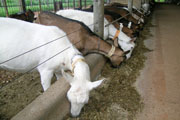
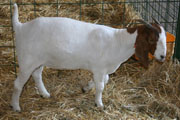
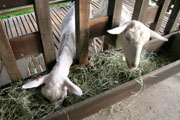
Ruminant animals (e.g. cattle, sheep, goats) have an unambiguous characteristic: they can convert human-inedible resources (e.g. cellulose) into animal products (e.g. milk and meat) for human consumption. Humankind have benefited from this symbiotic relationship with ruminant animals since prehistoric times. When adequately managed, grazing-ruminant ecosystems can be a sustainable and efficient method of producing high-quality protein with reduced environmental impacts in both developed and developing countries. Because of their anatomical evolution (rumen) and their ability to adapt to diverse environment (clime, soil, and vegetation), they inhabit virtually all regions of the world. Humans of all socio-economic and socio-cultural strata have in one way or another relied on ruminant animals for energy and/or protein consumption, wool, and draft power. This relationship has sometimes led to extreme production systems due to economy-of-scale factors in some countries. Such systems may cause irreversible damages to the environment and long-term human well-being. Therefore, appropriate management of ruminant animals is essential to enable long-term, sustainable continuation of this symbiotic relationship within acceptable animal welfare criteria. Education is the first step!
Globalization has imposed changes in economic and political arenas. Certain restrictions by the European Union concerning the use of antibiotics for animal production (including ruminant production), the increase in the demand for red meat in Asian markets, and the spread of worldwide diseases (e.g. BSE – Bovine Spongiform Encephalopathy also known as “mad cow” disease) have resulted in new opportunities for efficient production of ruminants in different parts of the world. Brazil and the US together have the largest commercial herd of ruminant animals in the world (http://www.fao.org). Therefore, a production alliance between these two countries is extremely desirable to control and to secure commodity trades worldwide.
A successful Brazil-US production alliance can be achieved through the “Ruminant Production in the 21st Century” project by understanding technical, socio-economic, and environmental differences and strategic possibilities between these countries. Through this project, we will enhance and expand efforts in undergraduate and graduate education to enhance language and cultural understanding, and minimize technical and economic disparities between these countries. This educational exchange between the US and Brazil is imperative to prepare leaders and extend the frontiers of knowledge in sustainable animal agricultural production. Brazil-US business partnerships have increased considerably in the last five years. For instance, in 2007, JBS (Latin America’s largest beef processor, Brazilian owned company) acquired US-owned Swift (the world’s third-largest processor of fresh beef and pork products) and other packing companies in the US, Uruguay, and Australia; JBS Swift (http://www.jbsswift.com) became the largest beef processor in the world. Similarly, major multinational companies based in the US involved in seed, fertilizer, agrochemicals, and animal genetics and feed have large presence in the Brazilian market (e.g., Monsanto, Dow Chemical, DuPont, Cargill, Mosaic). By working with such companies and being aware of their human resource needs, this program will enhance the career opportunities for our students by preparing them not only with technical expertise but also with Portuguese and English language capabilities and an in-depth understanding of Brazilian and US cultures. This proposal uses a framework whereby faculty and students from the institutions travel from their home institution to one of our partners to study, work, or conduct research.
| Target StudentWe will target primarily students from the agricultural, environmental, and life sciences, veterinary medicine, ecology, and biology. However, because issues of agricultural and environmental sustainability are complex, we anticipate that this program will also attract students in geography, geology, economics, political science, anthropology, genetics, and other fields. | Program DurationWe are planning to send 18 students during Years 2 to 4. Reciprocally, we expect to receive 18 students from Brazilian institutions. We anticipate that additional students will participate in internships or the exchange program using their own funds or other scholarships. Students may participate in all of the activities supported by this grant but will only receive one stipend. Exchange students will be expected to stay for a period of two quarters (UCD and CalPoly), one semester (TAMU) or one academic year. Internships will last from six to eight weeks. |
| Academic Credit and FeesAcademic credit for education abroad courses and the internship will be awarded as resident credit by the home university. The host university will award credit for students participating in the exchange, and the home university will accept these courses as transfer credit based upon receipt of the official transcript from the host university.
The sub-committee formed to oversee the international exchange protocols among the institutions will put forward a common agreement that meets all the institutions’ educational goals and ratified whereby each partner institution will send and receive the same number of participants for the same amount of time each academic year. Each outbound student will pay the full-time, in-state rate of tuition and academic fees at their home institution for the periods of their exchanges. These monies will cover the cost of each inbound visiting student. Outbound students will not pay tuition or academic fees at the partner host institution. |
Student Support and ServiceThe US institutions have infrastructure in place to assist international students in finding housing, food, physical and mental health, social activities, academics, and tax assistance. These international offices promote cross-cultural awareness through educational programming. Incoming student orientations include campus tours, bus transportation to local department stores for supplies, and assistance with registration for courses. Brazilian students will be received during their arrival in the US. Conversely, US students will introduced to Brazilian associations and participate in events to get acquainted with the Brazilian culture; both TAMU and UCD have active Brazilian associations.
Preparatory meetings will be conducted with US students prior to their travel to Brazil to organize proper documentation and visas, travel assistance, and transportation while in Brazil to the host university. Texas A&M University will develop a program-specific pre-departure orientation program to help prepare students to succeed in their international destinations. Please download the guidelines for orientation for outgoing study abroad/reciprocal exchange students for more information. Experienced faculty and returning students will participate, along with a knowledgeable representative from the host university. Returning students and faculty will be expected to provide a continuing social and cultural support system for the visiting students and faculty. Housing arrangements will be made in advance of a student’s arrival. Identified students, faculty and/or staff will be available to help with registration. |
| Expected Outcome and ImpactsThis proposal provides for the development of a new curriculum in global ruminant production by including shared courses, a cooperative education abroad program, internships and research opportunities for undergraduate and graduate students, language acquisition, cultural knowledge, faculty exchange, and research extending beyond the funding period. | Brazilian UniversitiesUniversidade Federal Rural de Pernambuco (UFRPE) is located in Recife, PE. The coordinator is Prof. José Dubeux.
Faculdade de Zootecnia e Engenharia de Alimentos (FZEA/USP) is located in Pirassununga, São Paulo. The coordinator is Prof. Raul Franzolin. |